The Songs That Raised Me Still Know How to Comfort Me

Have you ever felt a choke in your throat that can only be relieved by warm drops falling from the corner of your eyes? Or do you ever experience the big lump burning inside your chest but instead of hurting, it makes your whole body feel like in that strange, graceful trance nostalgia brings?

When I decided to sit down and write this, I had this overwhelmingly good–nostalgic–warm feeling that resulted in tears shed. Not once, not twice. 

Before bed, I was humming a tune and started singing, “Susan… Susan… Besok gede mau jadi apa…” and had this serious will to find the whole discography of Kak Ria Enes and Susan on music streaming platforms. I was so absurdly happy when I found Kak Ria Enes and Susan on Apple music.  So then I decided to listen to my favorite song, Susan Masuk Sekolah before really trying to sleep. 

Let me take you back to 12 hours before this morning (when I wrote this). 

I didn’t expect that the first tune of that song would make me cry. The kind of cry that you don’t understand why. The kind of cry that makes your heart filled with this happiness but it feels far away. The kind that makes you feel full, but empty. The kind that makes you long for something, but you just couldn’t point out what specific thing is that longing for. 

And then I was like, okay, maybe I’m in quite a hormonal imbalance and decided to listen to Kak Ria and Susan when I’m in a good state. I betrayed that commitment because on my way to work this morning, I listened to them. The whole Volume 3 and Susan Masuk Sekolah album. I knew this would put a lump in my throat and choke me with these feelings that I think I’m familiar with but not sure how to handle without crying like a baby.

I was probably around 2-3 years old when I first listened to Kak Ria Enes and Susan. I kept getting back to the old blue cassette when I was 5 to 7 years old. I remember how me and my older brother would sit around our old fading black Polytron  tape player to listen to it and dance to Si Monod song. 

But returning to it at 32, on a bus to work, felt different. And I’m not sure if this will work the same way with other 90s kids, but for me, my Susan moment was so therapeutic in the most nostalgic way. It lights up my drained exhausted soul. It sparks my sleeping hope back to life. It gives me this euphoric feeling because I smiled from ear to ear from the lyrics and Susan’s behavior. It makes me feel calm through Kak Ria’s soothing voice. 

And then when I stopped, it brings me to this conclusion:

Listening to your childhood songs as an adult is another way to get in touch with your inner child. And when you can make a good reflection while in that state, you heal another part of that scared little kid inside of you. In my case, I get to see something in life, from the perspective of a brave–full of energy–little me. At least for the whole duration of  Punya Cita-cita song.

Now I’m about to turn 33 in a week. And I think I will get back to Kak Ria and Susan once in a while for every time I feel like the world has given me too much stuff to think about. Because it will take me back to that time; the time when I don’t really understand how the world works that it makes everything possible in my mind and because of that I get to dream of every little dream I might have without the fear of losing it in a blink of an eye. 

Oh to be a kid and not knowing. To be a kid, and believe that the world is gonna treat you right. To be a kid, and think you’re going to make it when you’re old enough. To be a kid, inside a 33 years old body and still have that faith–that everything is going to work out in my favor.

So What’s Your Tragedy?

Tragedy. When we heard this word, the first image that came to mind probably was a scene of a shipwreck in the middle of a vast ocean swallowing a hundred souls alive. Or just a vivid memory of a massive crack on the town’s road after a deadly earthquake. Some might envision a friend’s grave after a car accident. The list could go on and on to describe what a tragedy could mean to some of us.

The meaning of tragedy is subjective and can vary greatly depending on individual experiences, cultural backgrounds, and philosophical beliefs.

Some of us. Well the rest could probably think of something abstract when we hear the word tragedy. One could think of what a tragedy it was that her dad was born in a poor family that he couldn’t get enough education to take him to be a teacher and ended up being a cop instead, because that was what he could afford at that time while everyone knows that being a teacher seems like his truest calling. Another could have thought about the joyful sound of family laughter at the dinner table when they hear that word but instead are face to face with the senseless empty room full of cold air and stillness because that’s what distance does. Probably when a dog was taught about the word tragedy and heard it for the second time, it probably would imagine chasing a moving tail in the corner of the couch that turned out to be its own. Or for instance, we could think about how messed up it is when the roles of power in some organization, a country even, is filled with people who—if not capable—are just not suitable for the responsibility, the impact could be catastrophic and can cause widespread suffering. And by suffer I mean stress inducing, rage boiling, traumatizing kind of suffering. Tragedy for some is when you did all the work but it’s your bosses taking all the credit with all that annual bonus. What a tragic tragedy.

So if what we are imagining and thinking of when hearing it are variously different, what is the true meaning of a tragedy then? 

Is it when something is supposed to happen but it doesn’t? Is it when what you want is not what you get? Is it when something broke you to the very core of your being that even the beauty of a bedazzled skyscraper couldn’t entertain you anymore? Or is it when you have something so unimaginably dreamy you wish to share it to the whole world but couldn’t because then it would ruin it? Is it something that you know  is so true and to share it can change how the system works but then the external factors get in the way that you might never get the chance to tell the tale?

Oh, to find the definition of tragedy is easy these days. In ancient Greece, tragedy was a ritual performance of the downfall of a great man—usually a king or nobleman— brought low because of some sort of fault. In Psychology, tragedy is defined as an event or sequence of events that can occur singly or collectively resulting in pain and suffering that impact us on so many levels (emotional, social, physical, coping, creative and spiritual).  In the writing world, tragedy is defined as a genre that focuses around a noble character who struggles against strong external challenges.

But, oh, how I forget what I really want to tell you about tragedy in the first place as I start writing about all the things swirling in my brain when I start typing the word and got distracted that I write about all sorts of things before I get to this part where I suppose to tell you what I really want say.

Well, to really define tragedy and understand its meaning is to have multiple layers of understanding and acceptance. Some would say one can only understand tragedy from experience. But I wouldn’t wish any of such to occur in anyone’s life. It’s just when I happen to have some experience with tragedy I just know now that it helped me to be the I am today. In my case and I believe a lot of us out here believe the same; that tragedy is this coarse sandpaper that shapes our edges, tuning it into the fine angle for the perfect curve, the straight line, the pretty outline and perfect footing.


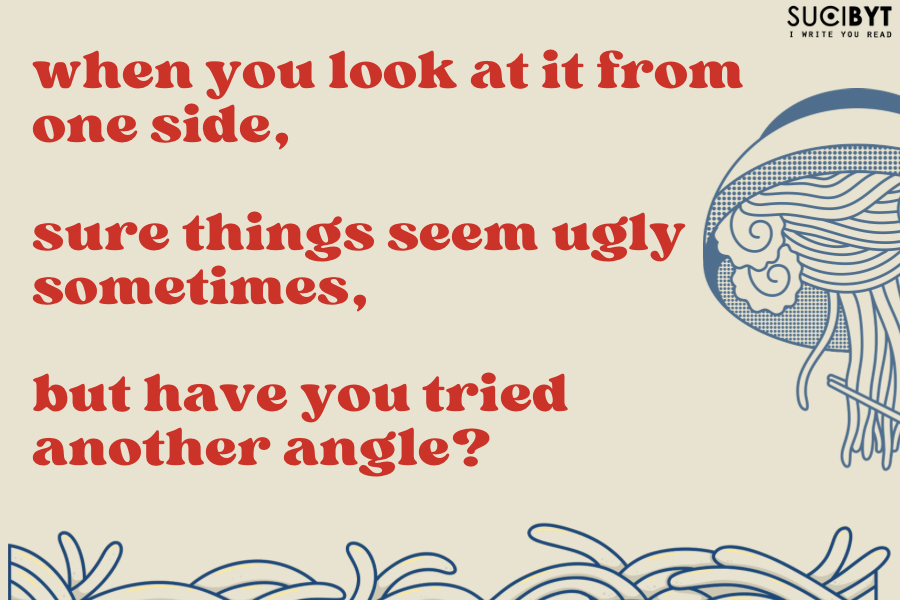
Oh, I really can’t seem to remember what I want to say in the first place talking all about tragedy and  humbly brag that I’ve earned my wisdom to accept the fact that life is a mix of bliss and tragedy, a perfect combination of ups and down, an artistic scramble of good and bad, a collaboration of strength and weakness. But I do remember one part of it. I remember to put this sentence at the end of this short piece; when you look at it from one side, sure things can seem ugly sometimes, but have you tried another angle? You’re welcome!

It’s Alright, San

San,
It's alright.
I am alright.
I have a perfect life.
The love of my life,
Well, they have everything
I never knew I needed.

So San,
It's alright.
I don't mind not having a new you.
I got them by my side,
And you're there sending signs
That you watch,
That you worry,
That you care,
And still cheering
For my good times.

San, it is alright.
We talked on Facebook, your Mom and I,

We got it.
It's alright,
San.

The Rage Against Nice: Why It's Time to Get Real About Our Feelings

I have been in constant exhaustion and I believe that a lot of us are feeling just as worn out as 7 hours of sleep is not enough to recharge the knackered body and a quick trip to our favorite destination can't comfort the drained soul anymore. Oh, and talk about how time just never felt so friendly because no matter how much we try and how rushing we are on floating through it, it always feels like there is so much to do on so little time spared. Some people would literally sacrifice their sleep to have a little more time with their loved ones. In my case, I keep daydreaming of how nice it would be if we can choose just 1 day of the week to sleep inside some kind of futuristic pod where we only have to have 2-3 hours of sleep instead of 7 hours each day.

There are 7 days on each week and all four weeks multiplied by the number of months every year. I don't care how many days there are every year, all I know is in one of those 7 days a week, we all have had the bad ones haven't we? Between some of those bad ones, of course there are the worst and the range of how we feel on each of them varies from desperately sad to horrendously mad.

And to add salt to that custom wound, we always betray ourselves by feeling a certain way about some feelings.

Like we would feel guilty if we feel trapped in the life we live in as if we're not grateful for all the blessings. Or we always blame ourselves for not doing anything on some days off just because we want to wind down from everything. We would hate it or be overly self-critical just because we have so much hate and rage on some bad days. The ugly part of it, we would always feel bad whenever we're mad about something that—let's say—is bad.

Let's see how it rolls in my everyday life. But first…


A Confession

I've been trying to write more and realizing that it will be just as hard if I really give myself some kind of censorship just because I keep trying to be nice that l have to cut some truth from my writing, which impossible to do because my words are always about the truth, because writing for me is about being honest to myself.

Alright, okay. I was not just trying to be nice (but I do know that I'm a nice one) but also because I feel bad if I write something about particular things. I would always think about people who would get hurt or offended just because what I have to say is probably different from popular opinion, or I would be spiraling about how my audience would perceive me because of what I feel about specific things. All that is what I believe is one of some reasons of why lately | write less.

So here it is, one of those colorful honesty that I've been trying to repress because I keep wanting to sound like a nice person and certainly don't want to hurt some feelings.

But whatever.


Some Bad Days Are The Worst

Alright, so anybody out here feeling like an explosive? Or just a meaty sack carrying tons of gunpowder around inside them that a single tiny trigger could really blow you up maybe?

Because I do and lately it's getting intense, especially on some of the bad days. But what do my bad days look like?

Let's say it varies and one of them is when rage fills my body and my blood is boiling that I believe my skin turns red during the time. I breathe hard, like the exhales and the inhales were intentionally audible with the heavy sigh and I'd groan angrily because sometimes it helps me get calmer.

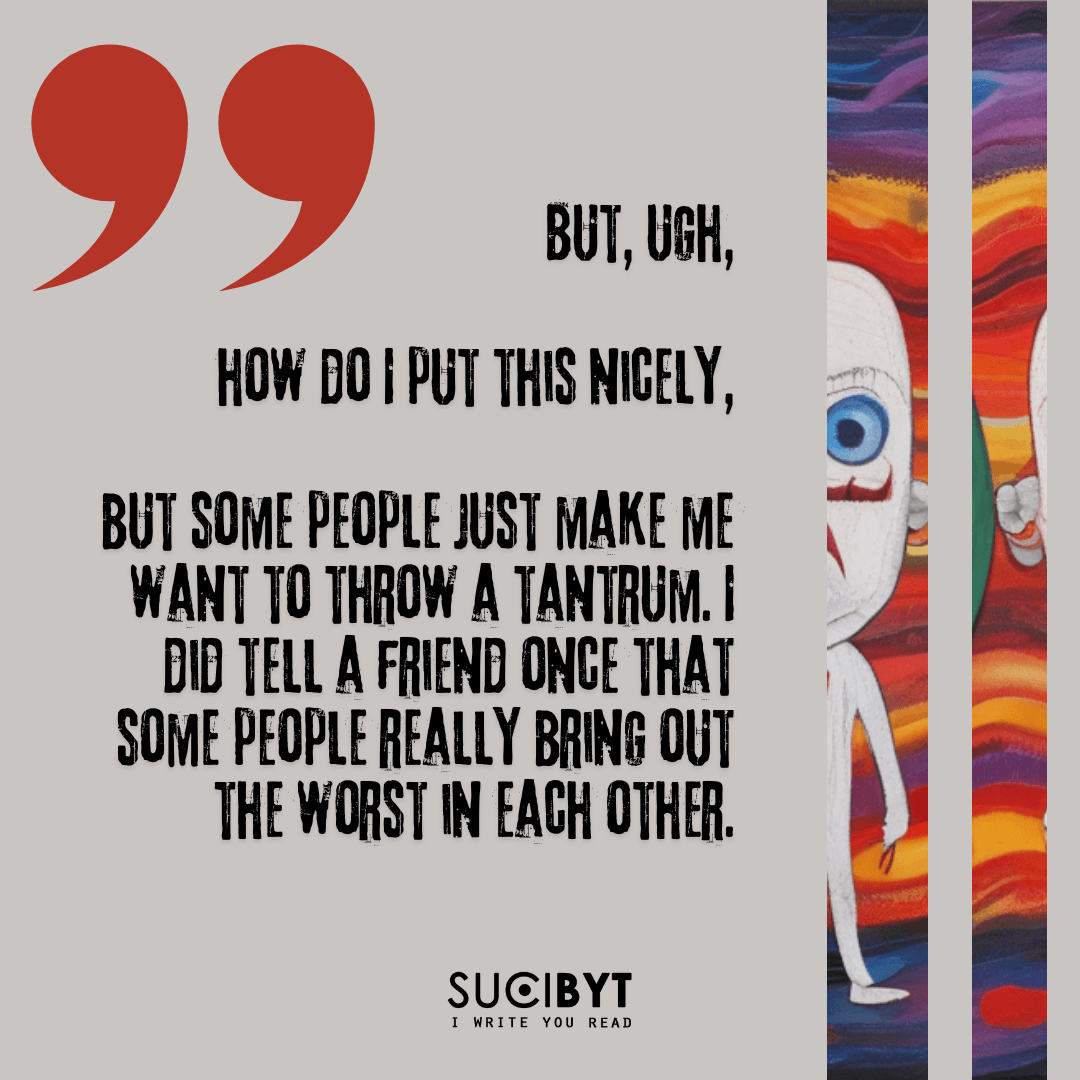
But, ugh, how do I put this nicely, but some people just make me want to throw a tantrum. I did tell a friend once that some people really bring out the worst in each other.
And I guess, some of those applied to me. Or just occasionally triggers some unhealed part of me because they too, unhealed and easily triggered. Like a sack of explosives.

The thing is, I keep telling myself that I want to practice breathing exercises instead of getting drowned in the spiraling thoughts, getting super angry and talking shit and thinking the worst about other people. But most of the time I just can't help but hate meeting people. I hate that their ugly behavior of talking about other people keeps annoying me every time. I hate that being surrounded by people, especially a pool of strangers or a chaotic crowd makes me panic and stressed out. I hate that their laughter and the sound they make while they're eating really makes me want to scream. I told everybody that I love the sound of keyboards clicking but there are places where the sound of somebody typing makes my head so full of anger. And I hate that with all the identity we bring with our existence, some people just can't shake the habitual hatred they mindlessly keep showing.

And also, the one trait that I really hate from humans, is that they can easily let the purest intentions get wrapped and overlooked just to have another promising return that being an opportunist gave. And I just can't stop connecting all the strings and writing all sorts of scenarios in my head that makes me just want to go home and hide under the sheets and forget that I have to attend my job 5 days a week, 9 hours everyday.

Oh, trust me I am not a saint but believe me I have been roaming the earth long enough to know that being called a loner is way better than having to deal with all that. I'm exhausted and keep dreaming about a life in the woods with all the silence but the rustling sound of the trees when they get kissed by the wind.


Now This Is Where It Gets Messy

I'm exhausted. There, I said it again. If all of that thing is what we have to deal with, who doesn't? And if exhaustion is the word I've written 5 times now in this one piece alone, I think I need to understand something about it. So here's my 2 cents.

As if having to do all the work, all the routines, all the commutes, all the chores, all the physical activity is not enough to spend our energy with, we tend to add some more work load to ourselves by being our first critics. I mean look at how I described my feelings when some people were typing too loud and it annoyed me. I said I hate feeling that way about it. I used the words "I hate" generously and it naturally came out of my mind right through my fingers. I genuinely hated the way I felt during those angry days. And that's where it's wrong.

Our whole life we've been told that anger is a bad feeling.

We've been told to control our feelings that at some point we have to shove it all down. We've also been told that we're not allowed to hate, to be mad, to be sad, to feel disappointed, and any kind of feelings that are considered "a bad one". It's no one's fault now that it took hours of therapy for us to understand that no feeling is a bad feeling. It's no one's fault that after all this time, after all the effort to heal, to unpack and to restore ourselves, we still find it hard to just feel the feeling instead of blaming ourselves for feeling it.

Now isn't it answering enough to my exhaustion problem that one of the big reasons is this: I let the feelings fold, shoved, stuffed myself and when it feels too much to carry, I blame myself for feeling that way.
Now what?

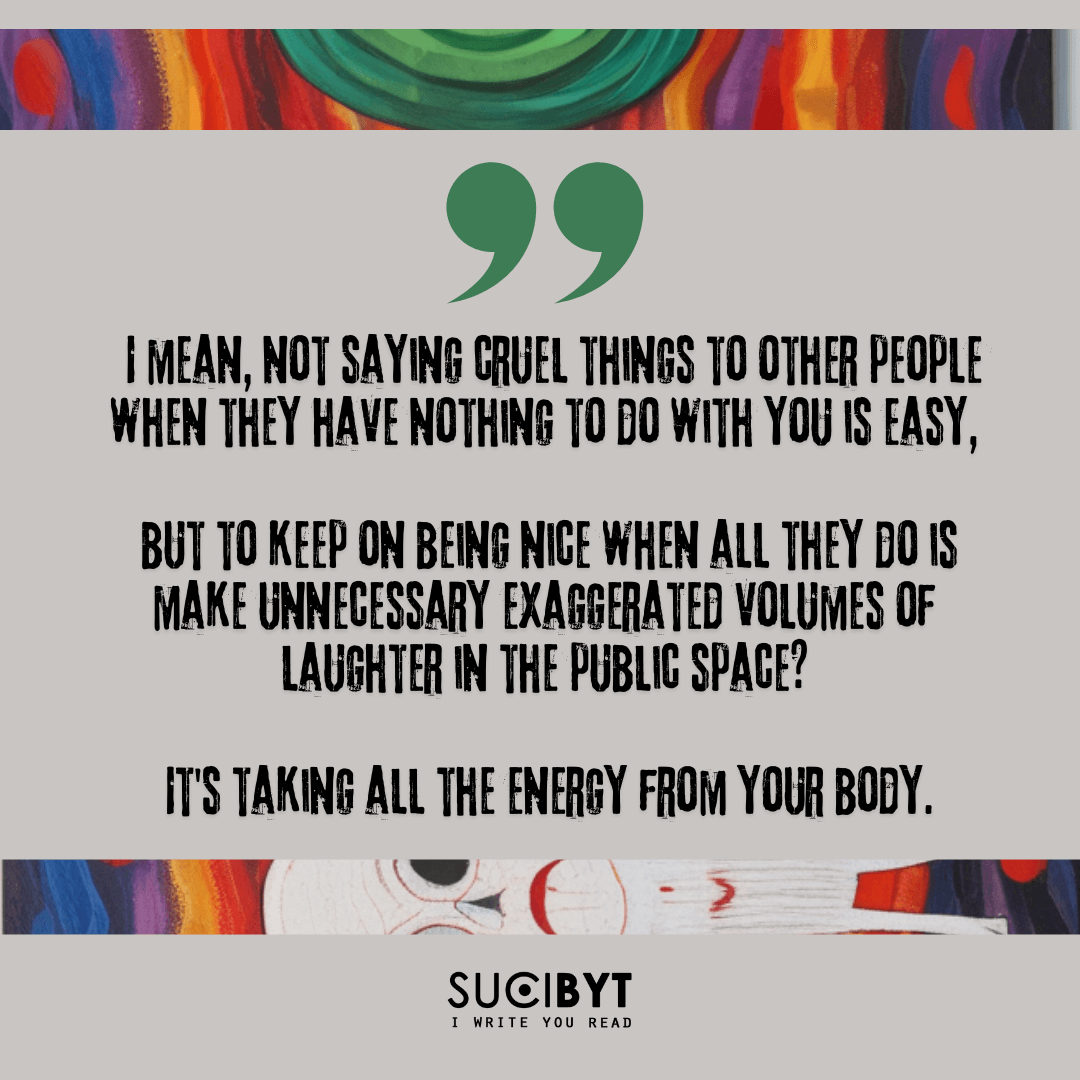
It is hard to be nice and I hate it when people say being nice is easy. I mean, not saying cruel things to other people when they have nothing to do with you is easy, but to keep on being nice when all they do is make unnecessary exaggerated volumes of laughter in the public space? It's taking all the energy from your body.

And to refrain yourself from yelling at the people who keep interrupting your conversation with a friend just because they want to be part of the talk is what I believe they call energy draining. And so be it.

It's okay to feel angry when those people make you feel uncomfortable at work because of their loud laughter.

It's okay if you hate your neighbor for building a literal cow barn next to your back porch and send the smell to your house all day long. It's okay to pull ourselves away from an interaction because we just can't stand the dominant talker with main character syndrome anymore.

It's okay to feel disgusted by a stupid argument someone's pushing on you.

Be angry, be mad, be disgusted, feel the hate. Feel all that feeling and never question why you feel it. My therapist said that it's not about feeling better, it's about getting better at feeling.
 

RIAK-RIAK MESIN TENUN

Dua atau tiga kali dalam setahun, aroma belerang yang mengendap di dasar danau Maninjau menguar. Jutaan ikan yang dibesarkan dalam karamba oleh ratusan pengusaha ikan nila akan mati dalam satu atau dua minggu. Sudah menjadi kebiasaan bagi pemilik karamba untuk menjadikan danau sebagai tempat pembuangan bangkai ikan-ikan gagal panen mereka. Bercampurlah aroma belerang, ikan nila pucat yang menggembung, dan segala hal membusuk yang dibuang ke tengah danau ini. Familiar bagi orang-orang yang memilih untuk tetap menghuni rumah peninggalan leluhur mereka di pinggir danau. Mengganggu bagi orang-orang yang bertahan hidup was-was berdampingan dengan lereng bukit-bukit yang terbiasa longsor. 

Rani, dibandingkan dengan siapapun percaya bahwa hidungnya lebih akrab dengan aroma belerang dan bangkai ikan yang menepi itu. Sambil tetap menikmati teh racikannya di beranda belakang setiap pagi dan menjelang maghrib, Rani tidak peduli jika ada ratusan orang yang nyaris muntah menghirup aroma musiman di sekeliling danau Maninjau itu. Baginya, bau busuk ini hanya identitas di kampung halaman tempat ibunya lahir, tumbuh, menjalani kehidupan dan menua sebelum kembali menjadi tanah.

Rani hidup di rumah kayu bersama saudaranya. Rumah berumur seratus tahun dengan beranda yang setengahnya menjorok ke arah danau. Rani punya kebiasaan menghabiskan tiga puluh menit setiap pagi dan sore untuk menikmati teh sambil merapikan benang-benang tenunan dan menghitung jumlah karamba yang terlihat dari berandanya. 

Rani tidak terlalu suka dengan jumlah karamba yang mengapung di permukaan danau Maninjau ini. Mungkin satu-satunya keturunan Angku Laweh, kakeknya, salah satu dari pelopor budidaya ikan nila dalam jala apung yang tidak ikut serta memanfaatkan danau untuk mencari nafkah. Karenanya, Rani sering menjadi bahan olok-olok orang kampung karena mengasingkan diri dari kegiatan ekonomi nomor satu di sekitar danau Maninjau itu. Rani sering dicibir oleh tetangga dan sepupu-sepupunya karena lebih memilih untuk hidup pas-pasan dengan penghasilan kecil yang didapatkan dari menjual songket.

Songket karya Rani memiliki corak unik yang penuh dengan pola-pola yang bercerita. Tidak ada orang di kampungnya yang terlalu paham pekerjaan Rani. Bagi mereka Rani hanya tukang tenun songket yang hidup dari santunan dua kakak pengusaha karambanya.

Sore ini, seperti biasa Rani duduk di beranda. Menghirup teh sambil menyusun benang dan memilih warna yang akan dipakainya untuk songket selanjutnya dan sesekali memandang jauh ke seberang danau memperhatikan sisa matahari bersembunyi di balik bukit. Namun riak danau petang ini terasa berbeda. Suara rangkulan air yang menepuk ujung tangga beranda terdengar lebih pelan namun dalam. Terasa dekat tapi seolah jauh. Rani beranjak dari kursi rotannya dan mendekati tangga, memperhatikan permukaan air yang terlihat semakin tenang seiring dengan silau petang yang semakin hilang dan redup. Perlahan semua suara menjadi seirama dan gumaman halus bersiul dari arah danau. 

Rani terkesiap. Sambil memejamkan mata Rani kembali mendekat ke arah danau dan duduk di ujung tangga. Suara merdu itu kembali mendengung. Mengalun dari kedalaman danau. Menggetarkan ujung-ujung rambut halus di kulit Rani dan membuat hembusan angin terasa ratusan kali lebih dingin. Terhipnotis. Rani semakin membenamkan kakinya ke dalam air dan melangkah turun ke anak tangga yang lebih rendah. Alunan suara dari jauh itu semakin berirama. Memanggil. Seketika adzan magrib berkumandang. Rani tersentak membuka mata dan meninggalkan beranda. Menutup pintu terburu-buru.

Di dalam kamar, setelah mengganti pakaian yang basah karena berendam di danau dan menunaikan sholat maghrib, Rani duduk bersandar di ujung kasur. Memandang keluar lewat celah yang disisakan jendela. Mengingat suara halus yang membuat Rani seolah ingin menyelam jauh ke dasar danau tadi. Baru sekali dalam hidupnya mendengar suara seperti itu. Dan hanya dari film fantasi soal makhluk lain di perairan Rani pernah mendengar suara yang serupa. Tapi apa mungkin di danau Maninjau ini ada makhluk yang selama ini diceritakan sebagai sosok khayalan itu. 

Rasa penasaran Rani lebih kuat dibandingkan rasa takutnya. Tanpa peduli langit sudah gelap dan danau semakin tenang, Rani bergerak keluar kembali ke beranda. Dengan langkah pelan Rani mendekati ujung tangga. Matanya menangkap selembar kain terhampar. Mengapung di dekat tangga. Rani mendekat dan mengambil kain basah yang memiliki motif dan warna unik itu. Songket tua berisikan corak abstrak membentuk sosok manusia, danau, dan manusia setengah ikan. Rani kembali tersentak. Namun tetap memegang erat kain di tangannya. Suara merdu yang didengarnya petang tadi kembali mengalun dari arah danau. Buru-buru Rani kembali masuk dan meninggalkan beranda dengan bulu kuduk berdiri.

Rani menyalakan keran air dan membilas kain basah yang dibawanya dari beranda. Membuat luntur air danau penuh bau amis dan membuat warna di kain itu semakin terlihat jelas. Semakin Rani memperhatikan motif di songket itu semakin matanya terasa panas sebelum akhirnya meneteskan butiran air dari sudut matanya. Rani menangis menyadari bahwa corak di atas kain itu ternyata bercerita tentang seorang manusia yang menenggelamkan dirinya ke danau untuk dapat bersama dengan manusia setengah ikan yang hidup di dasar danau. Hanya saja air mata Rani bukan tentang kisah cinta antara dua makhluk berbeda alam itu. Rani menangis mengingat alunan yang didengarnya yang membuat Rani merasa bahwa kisah cinta yang dilihatnya di atas kain songket ini bukan cerita fiksi yang sering dilihatnya di film-film atau cerita yang bisa dibacanya dari buku-buku. Rani tiba-tiba merasakan duka yang teramat dalam mengingat danau yang menjadi sumber kehidupan ribuan manusia yang hidup di kampungnya ini, perlahan mati. Seakan menenggelamkan diri ke dasar air—yang dilakukan sosok dalam corak songket itu—orang-orang memanfaatkan danau terlalu berlebihan adalah tindakan bunuh diri yang membuat kisah cinta antara manusia dan alam adalah cerita cinta antara dua makhluk yang berbeda alam. Seolah luntur, ketakutan Rani hilang. Rani bangkit dan kembali membuka pintu beranda.

Rani berdiri di ujung tangga membiarkan angin malam menampar wajahnya. Berharap kembali mendengarkan nyanyian dari danau Maninjau yang begitu ia cinta. Hening. Hanya bunyi air yang merangkak perlahan menepuk ujung beranda. Rani menghela nafas panjang, menghirup semua aroma yang bisa terhirup dari angin malam dan permukaan danau Maninjau yang semakin kotor.

Untaian benang-benang yang ditenun Rani dalam songketnya selama ini ternyata adalah wujud kepasrahan Rani terhadap pencemaran danau Maninjau. Tanpa merasa perlu untuk memberikan kritik, berusaha sekecil apapun untuk membantu danau Maninjau memiliki kembali keasrian purbanya, Rani memilih untuk menjadi pengrajin songket sebagai bentuk persembunyian dari dorongan apatis di dalam jiwanya terhadap perubahan alam dan perilaku manusia. 

Semakin Rani memandang permukaan danau, semakin ia terhanyut dalam corak riak yang menepi. Semakin Rani tenggelam dalam pikirannya, semakin Rani menyadari bahwa danau Maninjau telah memanggilnya. Lolongan merdu yang didengar Rani itu adalah tangisan pilu permintaan tolong oleh peninggalan fenomena alam yang sekarat. Hamparan lukisan abstrak yang tergambar dalam songket yang ia temukan malam ini adalah sajak penuh metafora yang mengajarkan Rani bahwa mencintai saja tidak cukup, dengan segala perasaan dan emosi yang dirasakannya menjadi manusia yang hidup di pinggir danau Maninjau dan menyaksikan keindahan alam ini berubah menjadi pembuangan kotor atas kerakusan manusia, Rani harus melakukan sesuatu.

Seperti sosok manusia yang menenggelamkan dirinya ke dasar danau untuk dapat bersama dengan manusia setengah ikan di dalam corak songket itu, Rani merasakan bersama butiran air yang meleleh dari sudut matanya, bahwa dirinya mungkin ditakdirkan untuk menjadi sosok manusia yang menceburkan diri ke air danau untuk hal yang sama: cinta. 

Untuk nyanyian yang terdengar oleh Rani malam ini, untuk sebuah tangisan sakral yang datang dari dasar danau, untuk lolongan dari alam yang menyerah atas keserakahan manusia mengeruk keuntungan tanpa peduli dengan makhluk lain yang bergantung pada danau ini, Rani bersumpah akan melakukan apapun yang bisa ia perbuat untuk mengembalikan keindahan danau Maninjau dan berhenti tenggelam dalam keadaan pasrah dan bersembunyi dari realita. Dengan membuat songket Rani akan bercerita soal danau Maninjau untuk memperjuangkan perhatian dari tangan-tangan dan kuasa yang lebih berpengaruh untuk memperbaiki kelestarian danau tempat kelahirannya.

Rani memejamkan mata. Sayup kembali terdengar dengungan merdu dari tengah danau mengiringi helaan nafas cita-cita yang mulai terpancar dalam jiwa Rani. Rani ingin membuat danau Maninjau berganti wajah, membuatnya kembali terlihat membiru menuju pemulihan. Rani ingin menyembuhkan danau yang sekarat ini dan aroma belerang yang sedang identik dengan kerusakan ini dapat dengan ajaib berubah menjadi simbol ketahanan.

Rani terus menyusun rencana dalam kepalanya, membayangkan setiap songket yang akan dibuatnya untuk menceritakan kisah penebusan dan komitmen. la ingin menjadi suara bagi danau Maninjau. Sambil menghirup aroma angin yang membawa bau amis, imajinasi Rani menarasikan danau Maninjau yang bebas dari belenggu kelalaian dan pengabaian, kembali bergema dengan melodi, alunan nyanyian dari dasar danau—kali ini, bukan kesedihan dan duka, melainkan harapan. Ikrar dan tekad Rani di malam yang tak terlupakan itu memicu perubahan dalam dirinya, menuliskan cerita dan kisah cinta baru antara manusia dan alam.

Dalam kain-kain waktu, songket-songket Rani akan menjadi benang-benang yang menghubungkan masa lalu, kini, dan masa depan, menjalin cerita ketahanan dan ikatan abadi antara manusia dan alam. Di mata Rani, Danau yang memudar dalam warna keputus-asa-an ini berkilau dengan pantulan biru langit di atas permukaannya yang tampak asri. 


Like The Crows


"If a slightly higher role

makes you shittier,

God knows what real power

would do to a person like you.

If looking down on people

is what makes you feel better,

I can only imagine what kind of wound

is still buried deep in your dark soul.

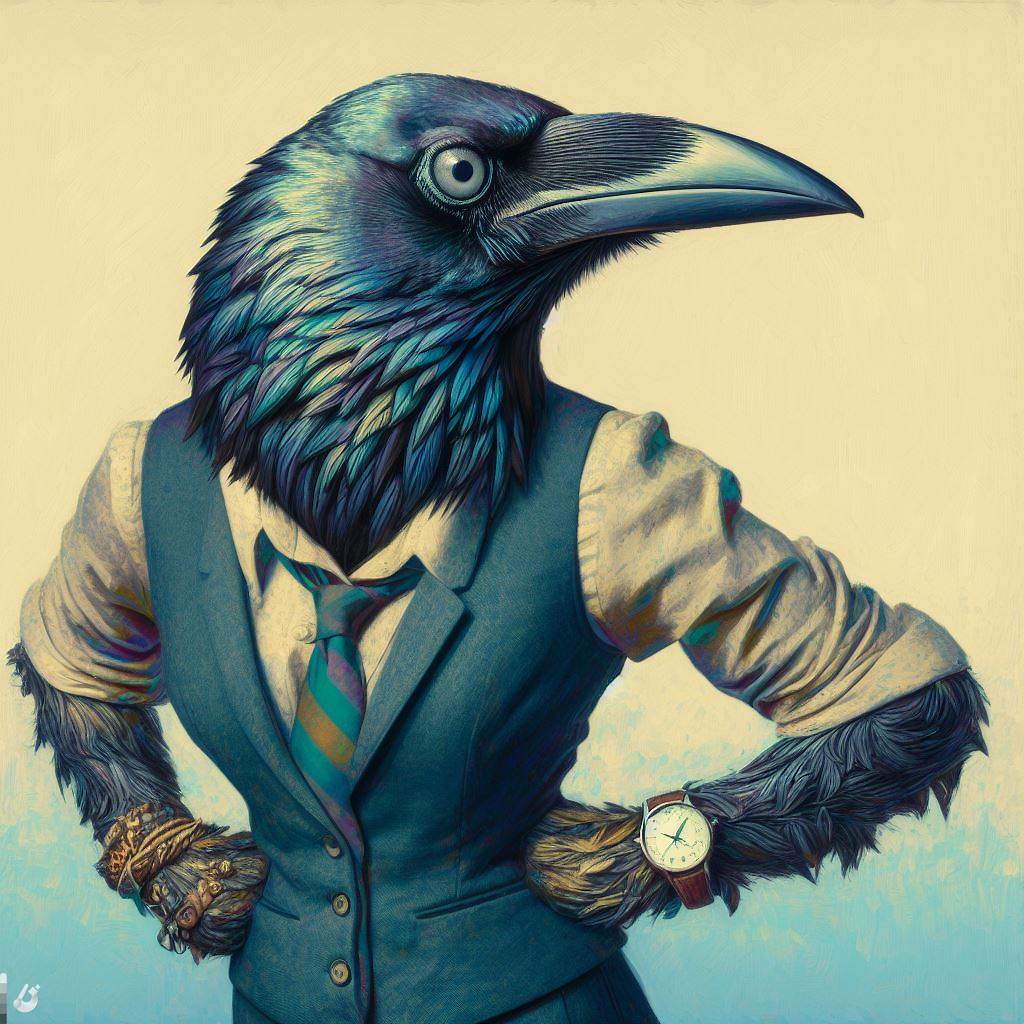
Oh, but I hold grudges like the crows,

so don't—

never once intentionally

treat me poorly.

And don't—

never unconsciously try

to give me bad tones.

You know, crows

attack.

You understand

how grudges work.

They grow.

So no,

your slightly higher role

does not grant you any respect

if you don't even deserve one."